

 Sign in


Merino, cashmere, alpaca: which wool really keeps you warm?
When temperatures drop, natural materials naturally come back into the spotlight. Sweaters, scarves, beanies, blankets, warm socks… as soon as winter sets in, wool proves its worth all over again. Except that not all wools are alike…
Between merino wool, cashmere and alpaca, it isn’t always easy to know which material really keeps you warm, which one is best for everyday wear, or which one suits sports use best.
The question deserves a little nuance. The warmth of a textile doesn’t depend solely on the material used. It also depends on the fineness of the fiber, the thickness of the yarn, the knitting and the density of the garment. A merino wool sock designed for hiking, for example, doesn’t meet the same need as a cashmere sock designed for everyday comfort.
In this article, we take a closer look at these three highly coveted materials: their origin, how they’re made, their qualities, but also their limits. The goal is simple: to help you better understand what you wear, and above all to choose the wool best suited to your needs.
Why are wools so sought after?
If wools remain so popular, it isn’t only down to tradition. Animal fibers have natural qualities that are hard to fully replace with synthetic materials. Wools insulate against the cold, are “breathable,” regulate moisture, provide comfort and often have a more lively feel than an artificial textile.
Their great strength also comes from their structure: good wool traps air within its fibers, creating an insulating barrier between the body and the outside. It’s this ability to retain heat without necessarily adding much weight that makes these materials so appealing.
But be careful: talking about “wool” as if it were one single material would be too simplistic. Merino wool, cashmere and alpaca don’t have quite the same purpose:
- Merino wool lends itself very well to sports and technical uses,
- Cashmere evokes refinement and everyday comfort,
- while alpaca occupies an interesting place between warmth, lightness and natural elegance.
The choice depends above all on how you intend to use it rather than on some absolute ranking.
Merino wool: the most versatile?
Merino wool comes from the merino sheep, a breed particularly renowned for the fineness of its fleece. Historically associated with Spain, this wool is now produced in several regions of the world, notably Australia and New Zealand.
The wool is harvested by shearing. It is then sorted, washed, carded, spun, and turned into yarns or textiles. Its great strength lies in the balance it offers. It is warm, yet breathable. It maintains good thermal regulation, absorbs moisture without immediately giving a cold sensation, and naturally limits unpleasant odors.

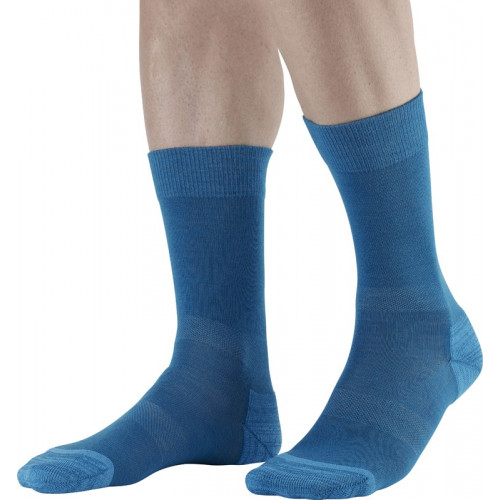
Our tall merino wool socks wrap you in incredibly soft comfort.
That’s precisely why merino wool is so widely used in technical clothing: hiking socks, thermal underwear, ski clothing, trekking outfits or base layers for outdoor activities. It moves well with the body, especially when it’s built into a well-designed textile.
As for the feel, a quality merino wool is much softer than ordinary wool. It can, however, feel slightly less “luxurious” against the skin than a fine cashmere. On the other hand, it often wins out in versatility. For active, changing, sporty or everyday use, it remains one of the most balanced materials.
To learn everything there is to know about merino wool, read our dedicated article.
Cashmere: warmth, finesse and softness
Cashmere comes from the cashmere goat. More precisely, it comes from the fine undercoat the animal grows to protect itself from harsh winters. Its name comes from the Kashmir region, although production has since spread widely to other cold areas, notably in Central Asia.
Unlike sheep’s wool, cashmere doesn’t come from an abundant fleece. It is a rare down, harvested in small quantities, then carefully sorted to keep only the finest fibers. This rarity partly explains its higher price.
Cashmere is prized above all for its softness, warmth and lightness. It gives that very particular feeling of enveloping warmth, without excessive heaviness. It’s a refined material, pleasant against the skin, often associated with high-end ready-to-wear, elegant winter pieces and comfort accessories.
So, does cashmere keep you warm? Yes, absolutely. At a comparable thickness, a fine cashmere provides an excellent feeling of warmth. However, it isn’t always the best choice for intense sports use. It is more delicate, more expensive, and requires more care when washing.
In everyday socks, cashmere really makes sense when you’re looking above all for softness, warmth and comfort. At Monnet, our cashmere socks follow exactly this approach: a noble material, designed to deliver a plush, warm feel for lifestyle use.
Alpaca: a warm, light and naturally elegant fiber
Alpaca wool comes from the alpaca, a camelid native to the high plateaus of South America, notably Peru, Bolivia and Chile. Like merino and cashmere, it is a natural animal fiber, harvested and then turned into textile yarn.
Alpacas are generally sheared, and the fiber is then sorted by fineness, color and quality. One of its distinctive features is the natural variety of its shades: white, beige, brown, gray, black… which sometimes makes it possible to limit the use of dye.
When it comes to warmth, alpaca has an excellent reputation. Its fiber can be light, soft, warm and pleasant to wear. It is often appreciated in sweaters, scarves, beanies, blankets and winter ready-to-wear pieces. It also contains little lanolin, which may interest people who are sensitive to this substance found in sheep’s wool.
Alpaca does have its limits, however. It can lack elasticity compared with merino wool, which sometimes makes it less suitable for certain technical garments worn close to the body. It can also be more expensive than ordinary wool, especially when it comes to baby alpaca or very fine fibers.
In short, alpaca is an excellent warm and elegant material, particularly interesting for winter clothing and accessories. For intensive sport, however, merino wool often keeps the edge thanks to its breathability, its elasticity and its ability to move with the body.

At Monnet, our raw materials are carefully selected. They come from Europe.
Cashmere or wool: which keeps you warmer?
Although the question “cashmere or wool: which keeps you warmer?” comes up often, it’s worth asking once again. If you compare a quality cashmere with an ordinary wool, cashmere will often give a softer, more enveloping sensation of warmth, with less weight. That’s one of the reasons cashmere is so sought after in high-end pieces.
But if you compare cashmere with a technical merino wool, the answer depends more on the use. When it comes to staying warm at rest, in an urban or home setting, cashmere is remarkable. But when it’s a matter of walking, skiing or hiking, merino wool can be more relevant, because it handles moisture and temperature changes better.
In other words:
- Cashmere is often excellent in that it provides a warmth synonymous with comfort,
- Merino wool, for its part, shines in its ability to stay pleasant in more active contexts.
Merino wool or cashmere: how to choose?
Between merino wool and cashmere, the choice depends above all on your use. If you’re looking for a material that is warm, breathable, durable and suited to physical activity, merino wool is often the best choice. It works very well for hiking, skiing and trekking socks, or for garments worn as a base layer.
If you’re looking for a softer, more precious, more enveloping material, cashmere will be more appealing. It’s ideal for lifestyle pieces, warm city socks, fine sweaters, scarves or garments worn more for comfort than for performance.
Put simply:
- Merino wool is the most versatile,
- Cashmere is often more refined.
Both keep you warm, but not quite in the same way.
Alpaca or cashmere: which to choose?
Between alpaca and cashmere, the comparison is subtler. Both materials are renowned for their warmth, their softness and their high-end feel. Cashmere often has the advantage of a very soft, almost silky touch, while alpaca appeals with its lightness, its drape and its naturally warm character.
For an elegant, very soft piece worn close to the skin, cashmere is hard to beat.
For a sweater, scarf, blanket or winter piece that is both warm and textured, alpaca has real arguments in its favor.
Price can also make the difference. A quality cashmere generally remains expensive, notably because of the rarity of the fiber. Alpaca can also reach high prices, especially in its finest grades, but it is sometimes more affordable depending on the product.

A pair of wool socks in the making... Let’s keep in mind that the way the material is worked is essential to the quality of the product.
And what about the eco-responsibility criterion?
Comparing these different fibers from an environmental standpoint calls for a great deal of caution. No material is perfect by nature. In reality, everything depends on the following factors:
- Farming conditions,
- Transport conditions,
- The wool processing method,
- The quality of the dyeing,
- The durability of the product,
- The care given to the textile.
Merino wool is largely produced in the Southern Hemisphere, notably in Australia and New Zealand, which can mean significant transport for a European brand.
Cashmere often comes from Asia, where issues of overgrazing and farming quality can be sensitive.
Alpaca is strongly associated with South America, with a naturally appealing fiber, but here again geographically distant from Europe.
That’s why geographic proximity isn’t always enough to judge a material. You have to look at the whole picture: real origin, processing, manufacturing quality, product lifespan and use. A product you wear for a long time, care for properly and that keeps its shape can make more sense than a cheaper textile that is quickly replaced.
To find out how to take care of your wool socks and keep them soft over time, read our washing tips.
At Monnet, manufacturing in France allows us to keep control over an essential part of the chain:
- Knitting,
- Finishing,
- Fit,
- Comfort,
- and the durability of our products.
Here, by the way, is where the components of our production chain come from:
- Manufacturing: French, in Montceau-les-Mines in Burgundy-Franche-Comté.
- Raw materials: France, Italy and Germany.
- Our knitting machines: Italy.
Comparison table: merino, cashmere, alpaca
| Criterion | Merino wool | Cashmere | Alpaca |
| Animal of origin | Merino sheep | Cashmere goat | Alpaca |
| Associated origin | Historically Spain, today notably Australia and New Zealand | Kashmir region, then Central Asia and other cold regions | Andes, notably Peru, Bolivia, Chile |
| Warmth | Very good, especially in active use | Excellent, soft warmth | Very good warmth, often lightweight |
| Softness | Very good if fine fiber | Excellent, luxurious feel | Good to excellent depending on fineness |
| Breathability | Very good | Good, but less sport-oriented | Good, depending on the knit |
| Ideal use | Sport, outdoor, skiing, hiking, active everyday wear | Luxury, lifestyle, comfort, pieces worn close to the skin | Sweaters, scarves, blankets, winter ready-to-wear |
| Price | Medium to high | High | Medium to high |
| Key strength | Versatility and thermal regulation | Softness, warmth, refinement | Warmth, lightness, natural elegance |
| Main limitation | Less luxurious than cashmere | More delicate and more expensive | Less elastic, sometimes less technical |
So, which wool really keeps you warm?
If you’re after a simple answer, you could say that cashmere and alpaca offer wonderful warmth for winter use, while merino wool stands out for its versatility and its ability to support effort. But in practice, the best wool is the one that matches your needs.
- To stay warm day to day, in a soft and refined material, cashmere is an excellent choice.
- For a warm, light and elegant piece, alpaca clearly deserves its reputation.
- For sport, hiking, skiing or any situation where the body alternates between effort, sweating and cooling down, merino wool often remains the most relevant.
That’s precisely why Monnet uses merino wool in many technical socks, notably for skiing, trekking or hiking, and reserves cashmere for models designed for softness, warmth and everyday comfort.
Key takeaways
Merino wool, cashmere and alpaca all have real insulating power, but they don’t meet exactly the same expectations. Merino wool is probably the most versatile, especially when you’re on the move. Cashmere is one of the softest and most refined materials for staying warm day to day. Alpaca, finally, appeals with its warmth, its lightness and its natural elegance.
Rather than looking for an absolute winner, it’s better to ask the right question: in what context will I wear it? For a ski or hiking sock, merino wool makes the most sense. For a warm, soft and comfortable sock to wear every day, cashmere becomes particularly appealing.
Ultimately, a good wool isn’t judged only by its ability to keep you warm. It’s also judged by its comfort, its breathability, how well it holds up over time and how well it fits the intended use.
Related products




Related posts

In sport, we readily talk about training, nutrition, hydration, stretching or equipment. Sleep,...

Photo: Trail des Cimes After a workout, we often think about the performance we delivered, the...
Cashmere is one of those materials spontaneously associated with softness, warmth, and a certain...

When it comes to trail running, there is a lot of talk about preparation, effort management,...

There was a time when high socks were associated with military uniforms, school wardrobes, or...

Some shoes immediately impose themselves, while others require a little more precision to reveal...

When a garment causes itching, redness, or a feeling of discomfort, we often tend to immediately...

Long appreciated for their practical side, socks have now become an essential accessory in any...
If you’re wondering what outfit you need for cross-country skiing, keep one simple idea in mind:...

When wondering what outfit to choose for ski touring, keep one key point in mind: ski touring is...