

 Sign in


Recovery after sport: what are the best practices?
Photo: Trail des Cimes
After a workout, we often think about the performance we delivered, the sensations, the finishing time or the immediate fatigue. On the other hand, recovery sometimes takes a back seat, as if it were merely a waiting period between two training sessions. That’s a mistake. From a sporting standpoint, recovery is fully part of progress.
Indeed, it’s during this phase that the body repairs the muscle fibers that were stressed, replenishes its energy reserves, regulates the inflammation linked to exertion and gradually returns to a state of balance. In other words, recovering well after sport isn’t just about “resting a little.” It’s an essential step for absorbing training, limiting the risk of injury and getting back to it in good condition.
In this article, we take a closer look at the recovery phase in sport, the right reflexes to adopt after exertion, the time needed to recover, and also the signals that should alert you when fatigue lingers too long.
What is sports recovery?
Sports recovery refers to all the processes that allow the body to gradually return to a state of balance after exertion. It begins as soon as the session ends, but can last several hours, several days, or even longer after a long or particularly intense event.
During exertion, muscles consume energy, produce heat, undergo micro-tears and place heavy demands on the nervous system. Depending on the sport, tendons, joints, feet or even the digestive system can also be put to work. Recovery therefore allows you to gradually bring all these elements back into good shape.
It doesn’t only concern elite athletes. A running session, a demanding hike, a bike ride, a day of skiing or an intense match can all call for real recovery. The longer, more unusual or more intense the effort, the more this phase deserves to be looked after.
Why is recovery essential?
Recovery is essential because it allows the body to absorb the workload. Without it, training piles up without really being assimilated. Muscles stay sore, energy reserves replenish poorly, sleep quality can deteriorate and performance ends up stagnating, or even declining.
It’s also during recovery that part of progress is built. After a well-dosed effort, the body doesn’t just return to its initial level: it can adapt to better meet the next demands. This is the principle of supercompensation. But for this mechanism to work, you have to give the body time to do its job.
Conversely, neglecting recovery increases the risk of persistent fatigue, recurring pain, loss of motivation and overuse injuries. Pain that lingers, heavy legs for several days, an unusual heart rate or a feeling of general fatigue should therefore not be ignored.
Recovery time after sport: how long does it take?
There is no universal duration. Recovery time after sport depends on many factors:
- The intensity of the effort,
- The duration of the effort,
- The type of activity,
- Your training level,
- Age,
- Sleep quality,
- Diet,
- Your day-to-day stress level.
After a moderate session, a few hours to 24 hours may be enough. After a very intense session, a long outing, a hike with a lot of elevation gain or a demanding trail run, you sometimes need to allow several days. If the effort was exceptional for you, or if it caused a lot of muscle soreness, recovery can take even longer.
We can distinguish three main timeframes:
- Immediate recovery covers the first hours after exertion: cool-down, hydration, a snack, gradual drop in body temperature.
- Short-term recovery plays out over 24 to 48 hours: sleep, nutrition, gradual disappearance of acute fatigue.
- Longer recovery concerns very intense or unusual efforts, when muscles, tendons or the nervous system need several days to return to a satisfactory level.
To go further on a specific case, you can read our dedicated article on recovering after a trail run, where timeframes vary greatly depending on distance, elevation gain and how technical the terrain is.
Signs that your body hasn’t recovered yet
The body generally sends fairly clear signals when it hasn’t yet recovered. The most obvious is persistent muscle pain, especially when it interferes with walking, going down stairs or everyday movements.
But it isn’t the only marker. Poor-quality sleep, unusual fatigue on waking, a drop in motivation, a feeling of heavy legs from the very start of your warm-up or unusually low performance can also indicate that recovery isn’t over.
You should also pay attention to localized pain. Diffuse soreness is fairly typical after an unusual effort. On the other hand, a specific pain, always in the same place, that increases with activity or changes your sporting movement, calls for more caution.
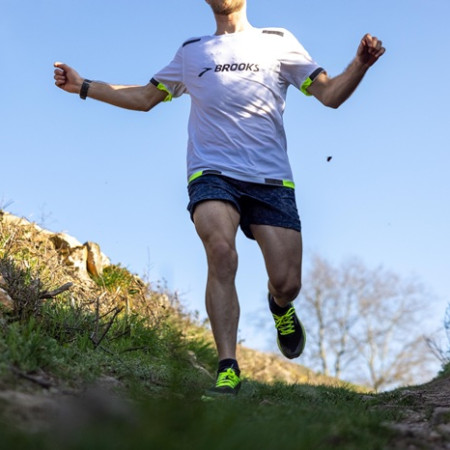
Sports recovery is an absolute must if you want to get back on the right foot. Photo: Kevin Michaud.
How to recover well after sport?
Recovering well after sport starts with simple actions. There’s no need to multiply complex methods if the fundamentals aren’t in place. Hydration, nutrition, sleep, cool-down and gradual return to activity remain the most solid pillars.
Post-exercise hydration and nutrition
After sport, the body needs to make up for fluid losses and replenish its energy reserves. Sweating causes a loss of water, but also of electrolytes, especially during long or intense efforts or in hot weather.
It’s therefore important to drink after exertion, in small sips, without necessarily forcing yourself to swallow large quantities at once. If the session was short and moderate, water and a balanced meal are generally enough. After a longer or more intense effort, a supply of carbohydrates and protein becomes more worthwhile.
- Carbohydrates help replenish glycogen stores.
- Protein, for its part, contributes to muscle repair. In practice, a simple snack can already do the job: banana and yogurt, toast and fromage blanc, a smoothie, a recovery drink, a bowl of rice and eggs, or a full meal if you have the appetite.
Practical example:
After a 1 hour 15 minute run at a sustained intensity, it can make sense to eat within the following two hours. The idea isn’t to count every gram down to the millimeter, but to combine a source of carbohydrates and a source of protein to give the body what it needs to rebuild.
Sleep, recovery’s number one pillar
You can drink properly, eat well and do gentle stretching; if your sleep is poor, recovery will remain incomplete. Sleep plays a central role in muscle repair, nervous regulation, mental recovery and readiness for the next sessions.
After a demanding session, the night that follows deserves particular attention. Going to bed a little earlier, limiting late-night screens, avoiding overloading your evening and allowing yourself a short nap the next day can help you better absorb the effort.
Sleep is particularly important after sports that heavily tax the legs, such as running, trail running, skiing, hiking or cycling. When muscle soreness fades but general fatigue remains, it’s often a sign that the body hasn’t fully recovered yet.
Active cool-down and stretching
An active cool-down means gradually bringing the intensity down rather than stopping abruptly. A few minutes of walking, very gentle pedaling or light mobility work can help you regain more comfortable sensations after exertion.
Stretching, on the other hand, calls for a little nuance. After an intense session, especially if your muscles are already sore, this isn’t the time to seek large ranges of motion or pull hard on painful areas. It’s better to favor gentle mobility work, simple movements and controlled ranges.
Deeper stretching can come back later, once the acute pain has subsided. In recovery, the goal isn’t to gain flexibility at all costs, but to gradually give the body back its ease of movement.
Cold, massage and compression: useful, but not magic
Cold, massage, foam rolling or compression can have their place, but they shouldn’t be seen as miracle shortcuts. Their value depends on the context, the objective and how you feel.
Cold can help you better cope with pain in the first few hours, especially after a very intense effort or a session that leaves you with heavy soreness. Massage or self-massage can improve comfort, reduce the feeling of stiffness and help release certain areas. Compression, for its part, can provide a feeling of support and lighter legs, especially after a prolonged effort or on the trip home.
However, these methods remain secondary to the basics. They support recovery, but replace neither sleep, nor hydration, nor appropriate nutrition.
How to recover well in the legs after sport?
The legs are very often the first area affected by sports recovery. Running, trail running, hiking, skiing, cycling, team sports: in most disciplines, they absorb a large share of the stress.
The quadriceps, calves, hamstrings, glutes, ankles and feet work constantly to produce effort, stabilize footing, absorb shocks or control descents. That’s why post-sport leg recovery deserves particular attention.
After a hard session, a few simple actions can help:
- Walk gently,
- Elevate your legs for a few minutes,
- Hydrate well,
- Avoid sitting for too long without moving,
- Resume activity gradually.
Compression can also be worthwhile for some people, especially when it gives a feeling of lighter legs.
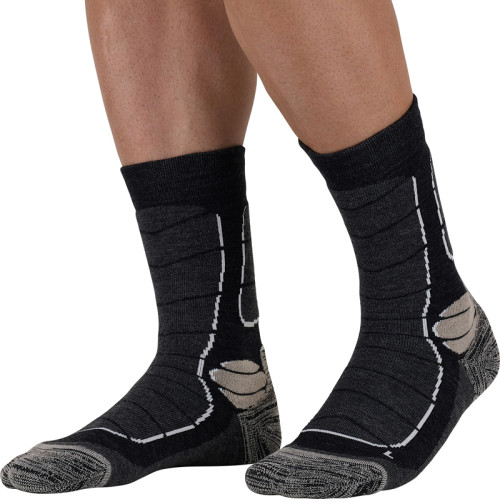
However, medical compression and technical sports socks should be distinguished. Medical compression socks address specific indications. Technical socks, for their part, are mainly about support, stability, limiting friction and comfort during exertion.
At Monnet, our running and trail socks are, for example, designed to stay firmly in place, limit creasing, support foot strike and protect the foot’s sensitive areas.
For long walks or mountain outings, hiking socks follow a similar logic: improving comfort, limiting friction and preserving your feet during the activity. It’s an indirect but important way of making recovery easier: the less your feet are stressed during exertion, the easier the aftermath is to manage.
For a more targeted look at long outings on foot, our guide to recovering after a hike also offers specific advice on heavy legs, muscle soreness and post-walk fatigue.
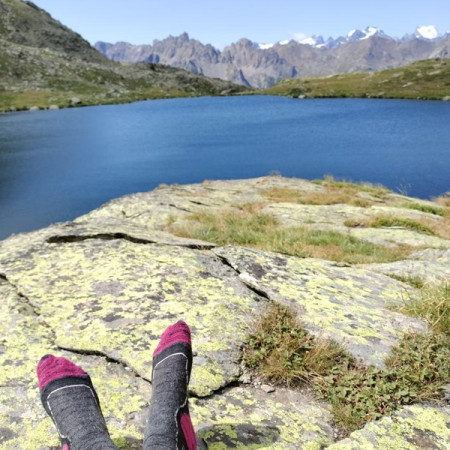
Quality hiking socks are meant to provide a plush interface between your foot and your boot. We warmly recommend our Trek Medium, made in France. Photo: Mlle_u_vadrouille.
How to improve your sports recovery over the long term?
Improving your recovery in sport isn’t only a matter of what happens after the session. It also depends on how training is built. A plan that is too heavy, too monotonous or too intense leaves little room for adaptation.
Progression should alternate demanding sessions, easier sessions and rest periods. It’s this alternation that allows the body to adapt. Conversely, stringing together hard efforts without enough recovery often ends up producing the opposite effect: fatigue, lower performance, pain and loss of motivation.
It’s also useful to build a few simple habits into your daily life: sleeping enough, eating regularly, drinking properly, planning lighter days, varying your sports and listening to the weak signals. Unusual fatigue, irritability, disturbed sleep or pain that keeps coming back in the same place are rarely trivial.
Fast recovery in sport shouldn’t be understood as a search for shortcuts. The real goal is rather to recover better, more consistently, and to build a body capable of stringing efforts together without burning out.
What to do in case of difficult recovery after sport?
A difficult recovery after sport can happen to anyone, especially after an unusual session, a competition, an overly ambitious return to training or a period of general fatigue. The first reflex is to temporarily reduce the load.
This can mean replacing an intense session with:
- Walking,
- Easy cycling,
- Mobility work,
- Complete rest.
You also need to get back to basics: drink enough, eat properly, sleep more and avoid adding stress to an already tired body.
On the other hand, certain signs should prompt you to seek medical advice:
- Pain that persists despite rest,
- Swelling,
- Loss of strength,
- Sharp or localized pain,
- Fatigue lasting several weeks,
- A significant drop in performance,
- Unusual shortness of breath,
- A feeling of never recovering.
In that case, advice from a doctor, podiatrist or physiotherapist may be necessary.
Overtraining doesn’t only affect professional athletes. It can affect anyone who increases their volume, intensity or training frequency too quickly, without giving the body time to adapt.
Summary table: good recovery reflexes after sport
| Timing | Priority | Good reflexes |
| Right after exertion | Bring the intensity down | Walk for a few minutes, breathe calmly, cover up if needed |
| Within 2 hours | Rehydrate and refuel | Drink in small sips, eat a snack with carbohydrates and protein if the effort was intense |
| That same evening | Promote sleep | Simple dinner, limit late-night screens, go to bed a little earlier |
| The next day | Assess how you feel | Observe pain, fatigue, how well you walk and your desire to resume |
| 24 to 72 hours | Gently get the body going again | Walking, mobility work, very easy cycling or relaxed swimming if pain allows |
| If fatigue persists | Reduce the load | Lighten training, avoid intensity, seek advice if pain or fatigue doesn’t subside |
FAQ: recovery after sport
How long does it take to recover after sport?
It all depends on the effort. After a moderate session, 24 hours may be enough. After an intense session, a long outing or a competition, you sometimes need to allow 48 to 72 hours, or even longer if muscle soreness is significant.
How to recover well after sport when you have heavy legs?
First, avoid adding an intense session too soon. Walking gently, elevating your legs for a few minutes, hydrating well, sleeping properly and resuming with very gentle activity can help. Compression can also provide a feeling of comfort for some people.
Can you exercise if you still have sore muscles?
Yes, but not just any way. If the soreness is mild, gentle activity can help get you moving again. On the other hand, if the pain changes the way you walk, makes going up or down stairs difficult, or stays very localized, it’s better to wait before resuming.
Do stretches really speed up recovery?
Not necessarily. After an intense effort, overly deep stretching can even increase discomfort. Gentle mobility work is often more suitable in the first few hours. Deeper stretching can come back once the pain has subsided.
What should you eat to improve your recovery in sport?
After a sustained effort, the ideal is to combine carbohydrates and protein. Carbohydrates help replenish energy stores, while protein contributes to muscle repair. A simple snack can be enough if a full meal isn’t possible right away.
When should you seek medical advice for difficult recovery after sport?
It’s best to seek advice if pain persists despite rest, if it is very localized, if a joint swells, if fatigue lasts several weeks or if performance drops for no apparent reason. In these cases, it’s better to check that it isn’t an injury or overuse.
Key takeaways
Recovery after sport should never be seen as a mere pause between two sessions. It shapes progress, injury prevention and the quality of your return to training. Hydration, nutrition, sleep, cool-down, active recovery and listening to your body’s signals remain the most reliable levers.
It’s also worth keeping in mind that every effort leaves a different mark. A weight-training session, a run, a hike or a day of skiing don’t stress the body in the same way. Good recovery is therefore always the one that takes into account the activity, the intensity, your level and how you feel.
Finally, the choice of equipment also plays a role. Suitable shoes and well-fitted, stable socks designed to limit friction can improve comfort during exertion and spare you many annoyances afterwards. Recovering better also means preparing your next sessions under better conditions.
Related products



Related posts
In sport, we readily talk about training, nutrition, hydration, stretching or equipment. Sleep,...

When temperatures drop, natural materials naturally come back into the spotlight. Sweaters,...

Cashmere is one of those materials spontaneously associated with softness, warmth, and a certain...

When it comes to trail running, there is a lot of talk about preparation, effort management,...
There was a time when high socks were associated with military uniforms, school wardrobes, or...

Some shoes immediately impose themselves, while others require a little more precision to reveal...
When a garment causes itching, redness, or a feeling of discomfort, we often tend to immediately...
Long appreciated for their practical side, socks have now become an essential accessory in any...

If you’re wondering what outfit you need for cross-country skiing, keep one simple idea in mind:...
When wondering what outfit to choose for ski touring, keep one key point in mind: ski touring is...