

 Sign in


Preventing and treating corns, calluses, and plantar calluses
A thick patch of hard skin under the heel, a hard spot on a toe, a callus that pulls with every step... These minor foot ailments are extremely common. Yet, they never appear purely by chance: they reflect a defense reaction from the skin facing repeated friction or pressure. Here is how to understand them, treat them, and above all, prevent them from coming back.
| The problem: corns, plantar calluses, and calluses are skin thickenings (hyperkeratosis) that appear when an area of the foot experiences excessive pressure or friction, whether in shoes or during physical activity. |
| The stakes: left unaddressed, these minor issues can become painful, crack, or even become infected — a risk that should never be underestimated in people with diabetes, older adults, or those prone to circulation disorders. |
| The solutions: a simple care routine (foot soak, gentle filing, moisturizing) combined with suitable, well-fitted, anti-friction shoes and socks makes it possible to both treat and permanently prevent their occurrence. |
Why do we suffer from foot ailments?
Feet, being the first point of contact with the ground, play an essential role in balance, shock absorption, and propulsion. When standing, they carry the entire body weight and allow you to move.
Main foot ailments result from pressure and friction, or from excessive compression of the skin against a bony prominence inside the shoe. In other words, a callus, corn, or plantar callus never appears by chance: it is a defense mechanism of the skin, which produces more keratin to protect itself against repeated stress.
When repeated, these factors lead to hyperkeratosis: the production of keratin, the protein that makes up the epidermis, is overstimulated, which gradually thickens the skin. Hard skin, calluses, corns, or plantar calluses then appear. And when feet are damaged or painful, overall body comfort and stability are at stake!
So let us get down to work to understand, prevent, and treat these ailments.
Factors leading to their appearance
As we have seen, three mechanisms lie behind almost all corns, calluses, and plantar calluses:
- Pressure
- Friction
- Repetition
Shoes that are too tight, an unsuitable insole, a poorly placed seam, a sock that slips, or an area of the foot under more stress than others are enough to cause a gradual thickening of the skin. These factors occur in several situations: tight shoes, high heels, or shoes worn without socks; intensive walking and sports activities; repetitive movements; being overweight; poor skin hydration.
Although anyone can experience them, these conditions are more likely to affect certain groups:
- Older adults, whose skin is thinner and drier
- People with diabetes
- People with foot deformities (hallux valgus, flat or high-arched feet, claw toes, etc.)
- Athletes, hikers, runners, and anyone who frequently wears rigid footwear
| Factor | Effect on foot skin |
|---|---|
| Tight shoes or high heels | Localized compression and friction |
| Intensive walking, sports | Increased pressure points and friction |
| Overweight | Increased pressure under the foot |
| Dry, poorly hydrated skin | Less supple skin, cracks more easily |
| Foot deformity (hallux valgus, etc.) | Appearance of new friction points |
| Advanced age, diabetes | Fragile skin, slower healing |
The different types of conditions and their treatment
Let us now identify each type of condition and how to treat it, so we can feel comfortable on our feet!
Corns
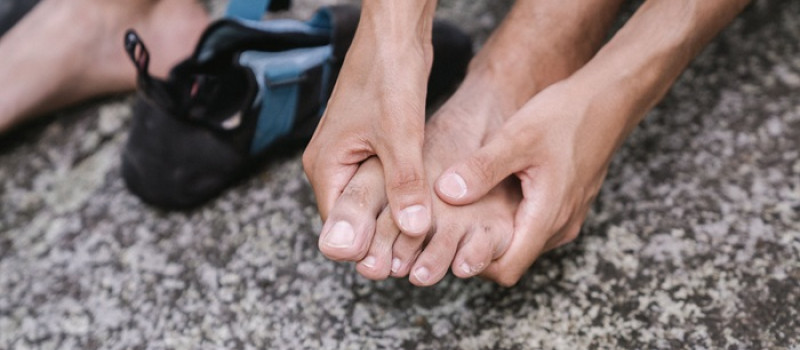
A foot corn is a thickening of the skin that consists of two parts. At the center is a rounded, dense, translucent core visible beneath the skin. Around this core forms a cone of hard skin that points inward deep into the foot. A corn is easy to identify because its outlines are well defined.
There are two main types of corns:
- Hard corns, the most common, which appear in areas directly exposed to friction and pressure from shoes: mainly on top of the outer three toes, around the toe joints, and on the outer edge of the little toe.
- Soft corns, which occur mainly between the fourth and fifth toes, often in facing pairs. They have a whitish color and a spongy texture. Their borders are red or inflamed, and their center features a dark spot, hence their name "soft corn" or "bird's eye corn." They are more prone to infection due to moisture between the toes.
Treatment and healing of foot corns
First and foremost, diagnosing a foot corn relies on a clinical examination. It is essential to consider the type of corn to choose the right treatment. Consulting a healthcare professional is also imperative if you have diabetes or peripheral artery disease in order to limit the risks of skin damage, infection, and poor healing.
To remove a corn, after softening the skin in a foot bath, use a pumice stone or file and gently pass it over the hard area. Repeat the process several times, taking care not to damage the healthy skin around the corn. You can use an ointment specifically designed to help dissolve the core, taking care to apply it only to the corn itself. Finally, apply a suitable bandage.
Calluses
Calluses are broader areas of skin with less defined edges than a corn. Their texture is quite hard, and their yellowish tone contrasts with the rest of the foot. Like a corn, a callus reflects a skin defense mechanism: to protect itself against repeated friction or pressure, the epidermis produces more keratin, forming a harder patch that is often dry or rough to the touch.
This defense mechanism makes logical sense: the skin tries to protect an overworked area. This is why calluses frequently develop in people who walk a lot, play sports, wear tight shoes, or stand for long periods.
They most often form on both feet in high-pressure areas: on the sides of the foot, under the foot at the ball or heel, or at the junction between the toes and the forefoot. When they first appear, calluses are minor and painless. However, if left untreated, they can spread several centimeters wide and crack at the heels, forming painful fissures.
Toe callus: a special case
Toe calluses are particularly common, especially on top, on the side, or at the tip of the toes. They can occur when toes rub against the shoe, when the forefoot lacks space, or when a mild deformity alters pressure points.
In this case, choosing the right footwear becomes essential. A toe box that is too narrow, a shoe that is too short, or a model that compresses the forefoot can prolong the problem. Socks also play a major role: a sock that is too thick in an already fitted shoe, or conversely a sock that bunches up and creates extra thickness, can increase friction. The goal is not only to remove the callus on the toe, but to understand why it returns: otherwise, it is likely to reappear quickly.
Painful callus: when should you be concerned?
A foot callus is often harmless. However, it requires more attention when it becomes painful, inflamed, cracked, or causes discomfort while walking or running. A painful callus under the foot may indicate excessive pressure on a specific area, such as under the ball of the foot or at the heel.
Caution is also required if the skin splits, redness appears, pain increases, or the area becomes warm, swollen, or tender. According to health authorities, it is best to consult a doctor or podiatrist promptly, especially if you have diabetes, suffer from peripheral artery disease, or if the lesion becomes infected, red, and very painful.
| Type of callus | Recommendation |
|---|---|
| Minor, mildly painful callus | At-home care |
| Painful callus that worsens or repeatedly reappears in the same spot | Medical or podiatric advice recommended |
How to treat a foot callus
Treating a callus relies on a simple approach: soften the skin, gradually remove excess hard skin, moisturize regularly, and reduce the friction responsible for the issue. You should not try to remove everything at once! Cutting a callus with a blade, using a rasp too aggressively, or tearing off thickened skin can cause a wound, bleeding, or worse: an infection. A gradual, regular, and gentle approach is much better.
Foot soak: the #1 step at home
A foot soak is one of the simplest steps to soften thickened skin before gently working on it. Simply immerse your feet in warm water for a few minutes, taking care not to use water that is too hot, especially if your skin is dry or sensitive.
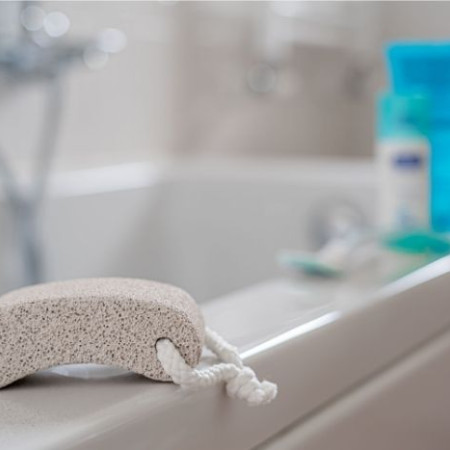
After soaking, gently pass a pumice stone or soft file over the affected area: movements should remain light, as the goal is not to strip the skin but to gradually remove dead skin cells. Once the foot is carefully dried, moisturizing becomes essential: a nourishing cream, ideally applied every evening, helps soften the skin and limits the recurrence of overly thick skin.
Baking soda: a good idea or a false miracle solution?
Baking soda frequently comes up in searches for natural callus treatments. Used in a foot bath, it can help soften the water and aid in skin softening. However, it should not be viewed as a miracle cure.
A baking soda foot soak can offer occasional benefits if the skin is simply thickened and not irritated: you can add a small amount to a basin of warm water, soak your feet for a few minutes, then dry thoroughly and moisturize. But be cautious: if the skin is cracked, irritated, extremely dry, or painful, avoid repeated attempts and opt for gentler care instead. In other words, baking soda can be part of a care routine, but it replaces neither daily moisturizing, proper footwear, nor a podiatrist's advice in case of persistent pain.
Creams, oils, and scrubs: restoring softer feet
A moisturizing cream applied every evening will often have a greater long-term effect than an aggressive scrub done occasionally.
- Urea-based creams: often used for thickened skin, they help moisturize and soften the stratum corneum.
- Plant oils: sweet almond oil or coconut oil provide comfort on dry skin, although they may not be sufficient for deeply established calluses.
- Scrubs: they must remain gentle. Light exfoliation can help smooth skin, but overly abrasive grains or harsh filing should be avoided.
Podiatric treatment
When a callus is thick, painful, or recurring, a podiatrist can intervene with greater precision. They can reduce excess hard skin using suitable instruments, identify pressure points, and recommend protective devices (orthotics, insoles, etc.).
Above all, a podiatrist is best qualified to help you understand why calluses form. Excessive pressure, unsuitable footwear, a mild foot deformity, or repeated strain during walking or sports can all trigger their development. If you are looking for a lasting solution, think beyond immediate treatment: removing excess hard skin offers relief, but identifying the cause is what prevents the problem from recurring.
Plantar calluses
Plantar calluses resemble general calluses but cover a smaller area. They are distinguished from corns by their much less defined borders. Most often, they are found under the foot, right behind the toes, hence their name "plantar calluses." Usually, no pain is felt unless the area becomes infected.
Treatment and healing of plantar calluses
Here again, the first step is to soften the callus with a foot bath, preferably with warm water. A specific cream can also be used to speed up the process. Use a pumice stone or file to gently rub the area.
Do not remove the entire callus in one session, as this risks infection. Instead, repeat the process several times over several days. If the callus is too deep or infected, consult a podiatrist to have it removed: the procedure is generally painless, and if it was very deep, a protective dressing can be applied.
How to prevent corns, calluses, and plantar calluses?
To avoid the appearance of these foot ailments, the goal is simple: eliminate friction and pressure points as much as possible.
Choosing the right shoes
Start by changing shoes and opting for a pair better suited to the morphology of your foot. They should be sufficiently flexible and wide enough at the front: a toe box that is too narrow promotes calluses and toe corns. Avoid high heels or pointed-toe shoes as much as possible. If a callus keeps returning in the same spot despite proper care, footwear is one of the first elements to evaluate.
Choosing the right socks
It is easy to forget, but socks serve as the direct link between foot and shoe. They can help reduce friction, or conversely exacerbate it if they slip, bunch up, trap excessive moisture, or create uncomfortable bulk.
To prevent calluses, corns, and plantar calluses, it is best to choose well-fitted socks that stay securely in place inside the shoe, offer good breathability, and match your activity. Precise sizing is key: socks that are too large risk bunching up, while socks that are too tight can compress the foot and cause further discomfort.
At Monnet, this approach is central to several of our ranges:
- For daily wear, our organic cotton socks offer softness, comfort, and a secure fit: their seamless toe design and heel reinforcements eliminate friction points most commonly responsible for calluses from the start.
- For walking and hiking, when feet are particularly susceptible to hotspots, double-layer models such as the Twin Trek or Mid Twin transfer friction between two fabric layers rather than onto the skin: invaluable protection for areas already weakened by a callus or corn.
- For feet prone to hallux valgus, which often causes toe calluses, the GelProtech Trek protective sock incorporates a silicone gel pad that absorbs pressure applied to this sensitive area.
- Finally, merino wool remains a valuable asset whenever sweat comes into play: its natural ability to absorb moisture while staying soft against the skin reduces friction typical of damp feet.
Orthotic insoles and silicone protections
A podiatrist may recommend wearing orthotic insoles to better distribute foot pressure. Thin, comfortable silicone pads can also help: they reinforce the plantar fat pad, thereby reducing pressure and friction on the most exposed areas.
Adopting good hygiene and hydration habits
Prevention also involves regular foot care: gentle daily washing, thorough drying (especially between the toes), and regular moisturizing. Dry skin cracks more easily, tolerates friction poorly, and tends to become rougher. Conversely, supple skin withstands daily strain much better.
Ideally, apply foot cream in the evening to clean, dry skin, focusing on heels, the forefoot, and already thickened areas. A dedicated moisturizing cream, or avocado oil combined with the active properties of lavender, geranium, and sandalwood essential oils, will help strengthen skin resilience. Finally, scheduling regular check-ups with your podiatrist helps catch and treat potential conditions early.
Mistakes to avoid
When a corn, callus, or plantar callus becomes visible, the first reflex is often to remove it quickly. This is understandable, but not always wise: aggressive actions can weaken the skin and create more problems than they solve.
| Mistakes to avoid |
|---|
| Using a blade to cut hard skin yourself |
| Using a metal rasp aggressively |
| Applying strong keratolytic products without precaution |
| Overusing very hot foot baths |
| Removing the full thickness of skin in a single session |
Please note: these precautions must never be neglected if you belong to a high-risk group (diabetes, poor blood circulation, loss of sensation, frequent wounds, or a history of foot complications). In these situations, professional advice is essential before undertaking any at-home care.
Corns, calluses, plantar calluses: how to tell them apart at a glance?
| Corns | Calluses | Plantar calluses | |
|---|---|---|---|
| Area | Small area, well-defined borders | Broad area, ill-defined borders | Limited area, smaller than a general callus |
| Typical location | Top and sides of toes | Heel, sole, sides of foot, toe joints | Under the foot, right behind the toes |
| Pain | Often painful (central core) | Can become painful if advanced | Generally painless, unless infected |
| Distinctive feature | Hard, translucent center core | Yellowish color, can crack at heel | Ill-defined borders, but smaller than a general callus |
Sources
- Ameli.fr — Corns, calluses, and plantar calluses: definitions, symptoms, and causes
- Ameli.fr — Corns, calluses, and plantar calluses on feet: what to do and when to consult?
- Ameli.fr — Treatment of corns, calluses, and plantar calluses on feet
- Ameli.fr — Preventing corns, calluses, and plantar calluses on feet
- French Federation of Diabetics — Diabetic foot: recommendations from the French National Authority for Health
Key takeaways
Corns, plantar calluses, and calluses are primarily skin defense reactions to repeated pressure or friction. They are not necessarily serious, but deserve to be understood, especially when they become painful, thick, or recurring.
To treat them, it is best to rely on a simple routine: warm foot soak, gentle pumice stone filing, regular moisturizing, and friction reduction. Baking soda can occasionally complement a foot soak, but it should never be considered a miracle cure. The most important step remains addressing the root causes.
And that is where choosing the right shoes and socks comes into play! Well-fitted, breathable, stable, and activity-appropriate models can minimize harsh friction and improve daily comfort. Saying goodbye to corns, calluses, and plantar calluses requires more than removing them: you must also avoid recreating the conditions that cause them to return day after day.
If you follow all these tips to the letter, chances are high you will put your best foot forward!
Related products


Related posts
In sport, we readily talk about training, nutrition, hydration, stretching or equipment. Sleep,...

Photo: Trail des Cimes After a workout, we often think about the performance we delivered, the...

When temperatures drop, natural materials naturally come back into the spotlight. Sweaters,...

Cashmere is one of those materials spontaneously associated with softness, warmth, and a certain...

When it comes to trail running, there is a lot of talk about preparation, effort management,...
There was a time when high socks were associated with military uniforms, school wardrobes, or...
Some shoes immediately impose themselves, while others require a little more precision to reveal...
When a garment causes itching, redness, or a feeling of discomfort, we often tend to immediately...
Long appreciated for their practical side, socks have now become an essential accessory in any...
If you’re wondering what outfit you need for cross-country skiing, keep one simple idea in mind:...