

 Sign in


Which trail/running socks should you choose?
For many runners, the shoe is the cornerstone of their equipment. However, the sock is the first interface between the foot and the shoe: it plays a decisive role in terms of comfort and performance!
Choosing the right running socks is therefore not a luxury, but an essential step to protect your feet and optimize your outings , whether on the road or in the mountains.
To determine which running sock you should choose, you need to prioritize four major criteria:
- breathability,
- protection,
- maintenance
- and suitability for the shoe used.
Running: The Importance of a Proper Sock
A quality sock does more than just cover the foot:
- It wicks away moisture,
- regulates temperature
- and limits friction which causes blisters and chafing.
Indeed, it's important to know that in both running and trail running, moisture is one of the runner's main enemies. Damp feet soften, the skin becomes more fragile , and the risk of blisters increases. This is why breathability and the ability to stay dry are fundamental criteria.
The sock also provides a protective barrier against shoe friction. In trail running, where the terrain is more aggressive, the sock absorbs some of the shock and reduces the risk of superficial injuries. Finally, it helps support the foot and ankle.
Finally, a sock that properly supports the foot limits muscle fatigue, stabilizes the arch of the foot , and contributes to a more efficient gait. Again, the best running socks and the best trail socks are designed with these three goals in mind: breathability, protection, and support.
Choosing the right running and trail socks
Before getting into the specific criteria, it's worth remembering that running and trail shoes don't have the same uses, and don't meet the same constraints. Road models are designed for smooth, predictable terrain, while trail shoes must handle irregularities, stones, and variations in slope.
So, on the road, we are essentially looking for lightness and finesse to maintain feel, while on the trail, we focus more on protection and durability.
Size and fit
A sock close to the foot is essential:
- If it is too small, it tends to “compress” the foot, block blood circulation and increase friction.
- Too big, it creases, slips in the shoe and creates hot spots...
That's why it's best to avoid overly broad ranges (models that cover three or four sizes) in favor of more precise sizes. Quality brands generally cut their models every two numbers, for example, 40-41 or 42-43. This ensures a perfect fit and directly contributes to user comfort.
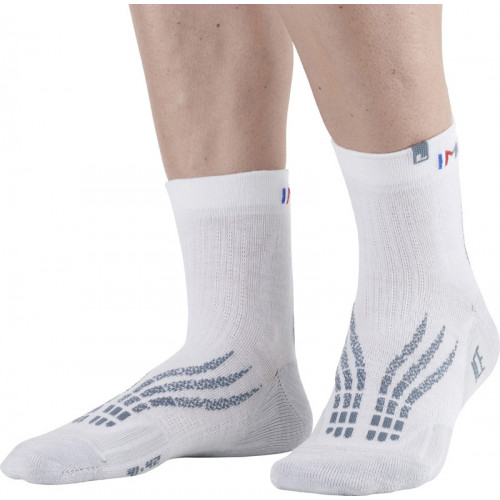
So-called "anatomical" socks, which differentiate between left and right feet, offer additional precision . They fit the actual shape of the foot, further reducing areas of friction. Similarly, a hemispherical heel, knitted in a Y shape, follows the natural curvature of the heel and prevents the sock from slipping under the arch of the foot. These technical details make all the difference when you have to run for several hours!
Foot protection
Reducing friction and cushioning shock are two key functions. A good sock should protect the forefoot and heel, areas subject to high stress, especially when running downhill.
Some models slightly reinforce these areas without adding too much thickness. This limits the appearance of blisters and makes running more comfortable on uneven terrain.
Effective arch support also helps reduce muscle fatigue and stabilize the foot in the shoe.
The choice of materials
The choice of materials directly influences moisture management, durability, and foot feel. Synthetic fibers like polyamide, elastane, or polyester dry very quickly and wick away perspiration effectively. They are durable and retain their elasticity even after numerous washes.
Merino wool, on the other hand, is a champion of thermal regulation. It keeps feet warm in winter and cool in summer while being naturally odor-resistant. Its only drawback: it dries more slowly than pure synthetic wool.
For this reason, many long-distance runners opt for trail running or mixed running socks, which combine the best of both worlds: thermal regulation, proper moisture wicking, and durability. They're often the ideal compromise for long-distance runs.

Photo: Trail des Cimes
Height and thickness
Another major criterion when choosing running or trail running socks is the height-to-thickness ratio of the sock. Indeed, the choice of height depends on the type of course and the conditions.
Low-cut socks are ideal for warm weather and short distances because they're lightweight and breathable. Long socks sit higher on the leg and protect against grass, rocks, and scratches, making them a good choice for more technical and aggressive terrain. Between the two, mid-cut socks are a good compromise for many situations.
Thickness, on the other hand, influences both protection and feel. The thicker a sock, the more cushioning and warmth it provides, but the more space it takes up in the shoe. If the shoe is fitted, a model that is too thick can compress the foot and create the opposite effect. Conversely, a thin sock maximizes the feeling of precision and control, but offers less protection on uneven terrain. The runner must therefore adjust the thickness according to their shoe and type of practice.
The question of design
Double-skin socks appeal to many runners because they significantly reduce friction. The first layer moves with the foot, the second with the shoe, thus limiting the formation of blisters.
However, this construction adds thickness and can reduce the runner's sense of precision. In some cases, this constraint requires a slightly larger shoe. And in any case, the runner who buys a double-skin sock will have to pay attention to the "remaining" space in their shoe, at the risk of trading the discomfort of friction for that of compression!
An alternative is to choose a high-end sock with a careful design (no toe seam, anatomical heel, targeted support, etc.) which offers excellent protection against friction and blisters, without resorting to double thickness.
Which socks for running or trail running: mistakes to avoid
Many runners assume that a thicker sock is necessarily more comfortable. However, if the shoe is already snug, this excess thickness can create compression and cause blisters.
Another pitfall: using cotton socks. Cotton retains moisture, dries slowly, and promotes maceration, which increases the risk of blisters and irritation.
Finally, wearing socks that are worn out, too loose, or have weak support is a bad idea . They move around in the shoe, wrinkle, and become a source of discomfort.
In short, knowing how to choose the right running or trail running socks is no small matter. It's an essential component of a runner's comfort and performance. A well-fitting sock wicks away moisture, protects against friction , and keeps the foot in place, thus limiting skin injuries and muscle fatigue.
Remember that the best running socks are distinguished by their lightness, breathability, and support, perfect for the road and sustained efforts. As for the best trail socks, they prioritize protection, durability, and thermal regulation, essential on demanding terrain. Investing in quality socks means extending the life of your feet and enjoying every outing, without pain or unpleasant surprises!
You may find these other blog posts about running and trail interesting :
Related products


Related posts
In sport, we readily talk about training, nutrition, hydration, stretching or equipment. Sleep,...
Photo: Trail des Cimes After a workout, we often think about the performance we delivered, the...

When temperatures drop, natural materials naturally come back into the spotlight. Sweaters,...
Cashmere is one of those materials spontaneously associated with softness, warmth, and a certain...

When it comes to trail running, there is a lot of talk about preparation, effort management,...

There was a time when high socks were associated with military uniforms, school wardrobes, or...

Some shoes immediately impose themselves, while others require a little more precision to reveal...

When a garment causes itching, redness, or a feeling of discomfort, we often tend to immediately...
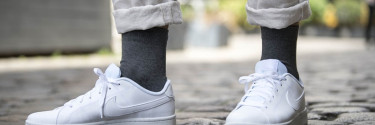
Long appreciated for their practical side, socks have now become an essential accessory in any...

If you’re wondering what outfit you need for cross-country skiing, keep one simple idea in mind:...